Types of Honey
Why one honey is nearly clear and another almost black, and how nectar source drives colour, aroma and flavour.
5 minute read
Monofloral and multifloral
A monofloral honey comes predominantly from one nectar source — acacia, clover, orange blossom, heather, thyme, chestnut, manuka. A multifloral or wildflower honey draws from whatever is flowering across a landscape at once.
Neither is inherently superior. Monofloral honey has a more defined character; multifloral honey has more complexity and shifts with the season.
Colour is graded, and it means something
Honey colour is measured on the Pfund scale, which runs from 0 for water white through to 114 and above for dark amber.
Broadly, pale honeys are mild and delicate; darker honeys carry more minerals and plant compounds and taste stronger, sometimes with a bitter edge. Unusual sources can produce unusual results — colonies foraging kudzu have produced honey ranging from red to purple.
- Water white to extra light amber — acacia, clover. Mild, clean, subtle.
- Light to amber — wildflower, sunflower, orange blossom. Floral and fruity.
- Dark amber and above — forest, honeydew, buckwheat, chestnut. Malty, resinous, low in sweetness.
Aroma comes from volatiles
Each honey carries a set of volatile organic compounds, and the count varies enormously by source. Analyses have found 48 distinct volatiles in longan honey against only 8 in sunflower honey.
Those compounds — aldehydes, alcohols, esters, terpenes and others — are what your nose reads before the sweetness arrives, and they are the first casualties of heating.
What we produce at Malili
Our land sits in acacia country, which gives us a very pale, slow-setting acacia honey after the June flow. The short rains bring a broad wildflower flush in November. Hives placed in the wooded watercourses give a much darker, more resinous honey in August.
Same apiary, three quite different jars, decided entirely by what was flowering and where the hive stood.
Colour is a rough guide to strength, not to quality. Pale honey is mild; dark honey is bold. Neither is better than the other.
Figures on this page are drawn from the Wikipedia article on Honey and standard apicultural references.
Taste the difference
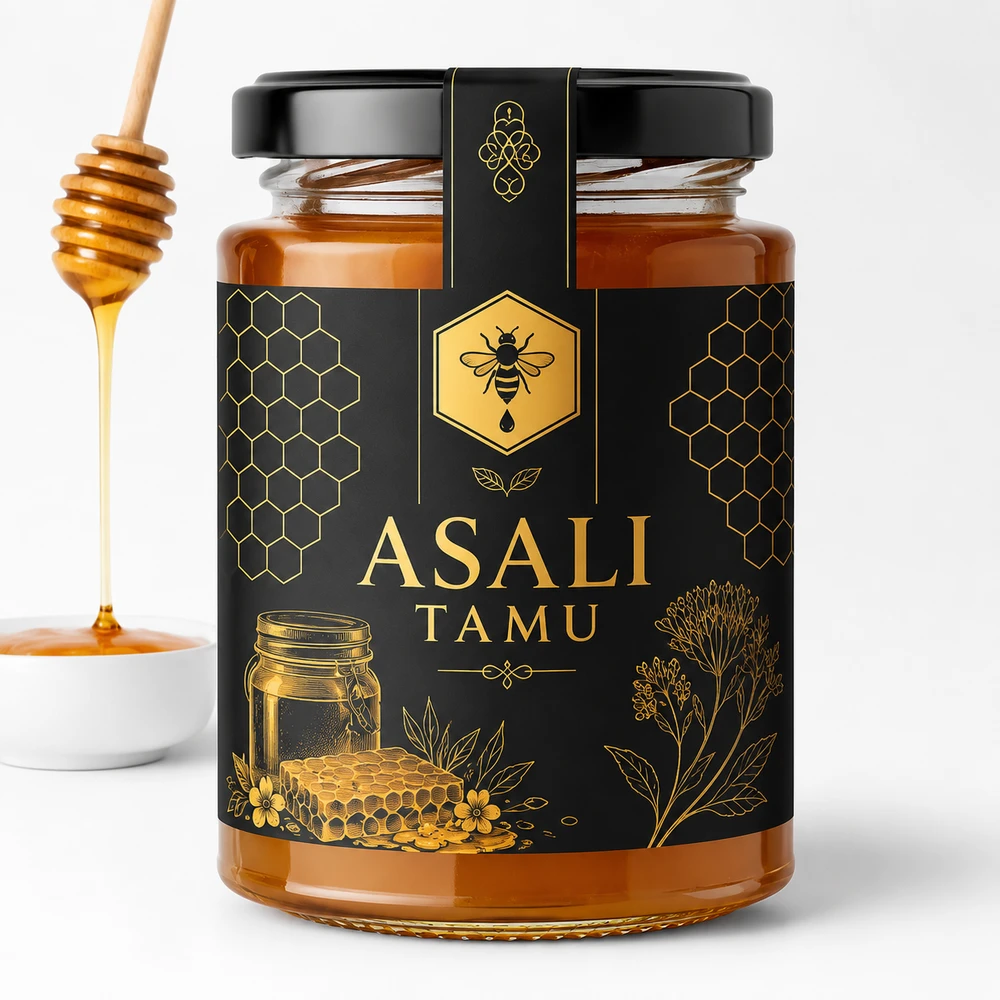
Pure Natural Honey — 250 g
Raw multiflora honey in a premium glass jar. 250 g net weight, KSh 2,200 per kg.
Pure Natural Honey — 1 kg
Raw multiflora honey in a premium glass jar. 1 kg net weight, KSh 1,750 per kg.
Pure Natural Honey — 2.5 kg
Raw multiflora honey in a premium large glass jar. 2.5 kg net weight, KSh 1,600 per kg.
Pure Natural Honey — 5 kg
Raw multiflora honey in a premium food-grade container. 5 kg net weight, KSh 1,440 per kg.